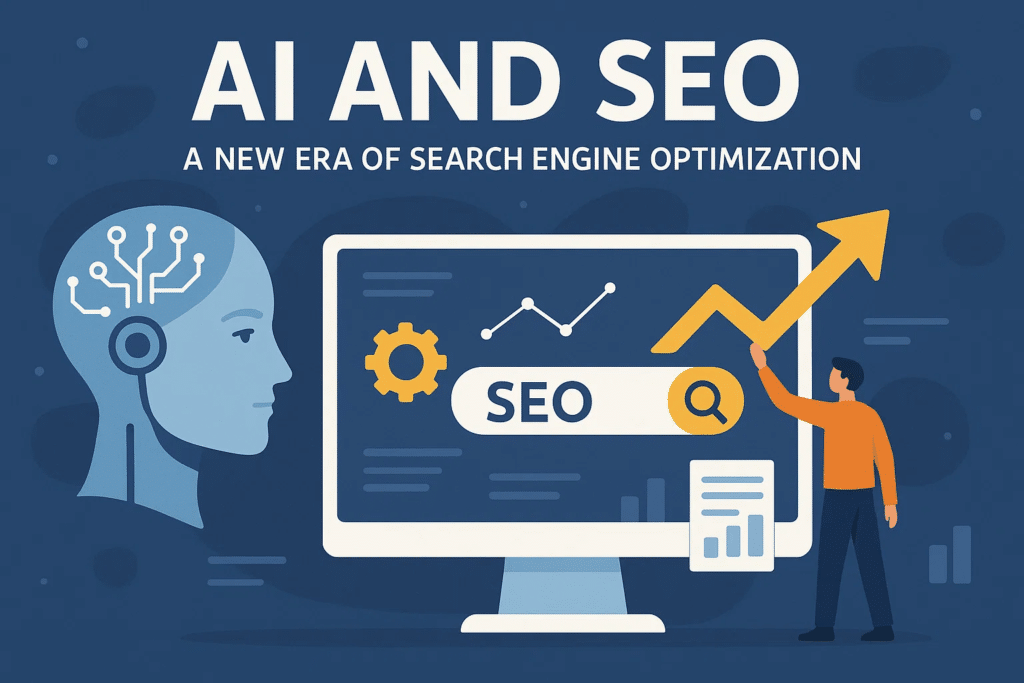
In 2026, the digital landscape has officially split. We are no longer just optimizing for the “Ten Blue Links” on a Google results page; we are optimizing for the Generative AI that synthesizes those links into a single answer.
This new discipline is being called GEO (Generative Engine Optimisation), and it’s the essential partner to traditional SEO. Here is why your brand needs to master both to stay visible.
The New Search Reality: Ranking vs. Citation
In the old world of SEO, the goal was to rank #1 so a user would click your link. In the world of AI search (think Perplexity, SearchGPT, and Google’s AI Overviews), the goal is to be cited.
- Traditional SEO is about Discovery: “Help the user find my page.”
- GEO is about Inclusion: “Make sure the AI uses my data to build its answer.”
If an AI provides a perfect summary of “The best media strategies for 2026” but doesn’t mention Spec Media, you’ve lost the lead—even if your website technically ranks on page one.
3 Pillars of a Dual-Optimization Strategy
To win in 2026, your content needs to satisfy two different “bosses”: the Google algorithm and the Large Language Model (LLM).
1. From Keywords to “Entity” Authority
Traditional SEO loves keywords like “digital media agency.” AI, however, looks for Entities—the relationships between your brand, your experts, and your results.
- The Fix: Don’t just write about a topic; own it. Use Schema Markup (FAQ, Service, and Person) to tell the AI exactly who you are and what you know. If the AI sees your brand consistently linked to “high-spec video production” across the web, it will confidently cite you as an authority.
2. The “Answer-First” Content Structure
AI engines use a process called RAG (Retrieval-Augmented Generation) to “clip” segments of your site. If your answer is buried under 500 words of fluff, the AI will skip you for a competitor who gets to the point.
- The Fix: Use the Inverted Pyramid style.
- The Heading: A direct question (e.g., “What is the ROI of AI video?”)
- The Lead: A 40–60 word “definition” paragraph that an AI can easily quote.
- The Depth: The nuanced data, case studies, and expert opinions that follow.
3. Optimizing for “Zero-Click” Search
More users are getting their answers without ever leaving the search page. While this sounds like a nightmare for traffic, it’s an opportunity for Brand Velocity.
- The Fix: Focus on Brand Mentions and community presence. AI models weight information from Reddit, niche forums, and industry publications heavily. If you are being talked about in the places where your audience hangs out, the AI will perceive you as a “consensus” choice.
Comparison: SEO vs. GEO in 2026
| Feature | Traditional SEO | GEO (AI Search) |
| Primary Goal | Clicks to website | Citations in AI answers |
| Content Focus | Keyword density & Backlinks | Factual density & Structure |
| Winning Format | Long-form “Ultimate Guides” | Modular “Extractable Chunks” |
| Success Metric | SERP Position / CTR | Share of Model Voice (Inclusion) |
The Bottom Line for Spec Media
The secret of 2026 is that the best SEO is now the best GEO. By focusing on high-integrity data, clear structure, and undeniable authority, you satisfy the bots that crawl and the bots that talk.